
Why a Napa Wedding Coordinator Elevates Your Local Luxe
Start Here: How a Napa Wedding Coordinator Elevates a Local-Luxe Celebration (Introduction)
Your calendar is full—your wedding shouldn’t become a second job. For Bay Area professionals who want an elevated Napa weekend without micromanaging, a seasoned Napa wedding coordinator becomes your strategic partner—aligning permits, timelines, design, and guest experience into one cohesive plan. The region’s destination appeal is real, and official guides make it easy to see why: start with Napa Valley Weddings. (visitnapavalley.com)
The decision to marry close to home still deserves five-star hospitality. Coordinators translate your preferences into action: venue shortlists, chef-driven menus, silent logistics like shuttles, and a risk-ready production plan—so you enjoy the moments, not the to‑dos. Average wedding investment continues to trend high, reinforcing the value of expert planning that prioritizes what guests remember most. (theknotww.com)
A Napa coordinator protects your time, your design vision, and your peace of mind—while keeping the weekend unmistakably “you.”
Ready to map your Napa weekend? Book a 20‑minute consultation to align venues, permits, and guest transit in one call.

From Bay Area to Napa: Designing a Seamless Wedding Weekend Itinerary
Your itinerary should flow like a great tasting—structured, but never rushed. A coordinator builds a Friday‑to‑Sunday arc that matches how your guests actually travel: staggered arrivals, welcome toast windows, ceremony and dinner pacing, and a relaxed recovery brunch. For inspiration on pacing day-by-day, browse Visit Napa Valley Trip Ideas. (visitnapavalley.com)
Thoughtful buffers are the luxury. We front‑load travel time, design “flex moments” for late shuttles, and anchor each day with one marquee experience. The result is a guest‑first flow: fewer lines, better lighting for photography, and energy that builds—not fades.
Consider a “choose‑your‑own‑adventure” Saturday morning: spa reservations, a guided stroll downtown, or a private tasting for VIPs. Everyone converges on time because transportation and communication were handled upfront.
Luxury Napa Valley Wedding Planning: Curated Venues, Culinary Partners, and Design Cohesion
Local-luxe thrives on curation. Your coordinator shortlists venues that match capacity, acoustics, and curfew—and assembles a culinary team that tells a Napa story course by course. For culinary scouting and hotel synergy, consult The (MICHELIN) Guide to Napa Valley. (guide.michelin.com)
Design cohesion isn’t more décor—it’s restraint with intention. We repeat materials and tones (linen, stone, oak) across touchpoints, integrate varietal‑driven florals, and sequence lighting like theater to shape guest mood as the sun sets.
Case in point: a minimalist barrel-room dinner with neutral linens, matte flatware, and candlelight, echoing your stationery textures. It feels effortless because every partner read the same brief—once.
Winery Wedding Permits and Regulations: What Couples Need to Know
Permits shape possibilities—know them early. Napa County uses winery use permits and legacy rules to define what activities, guest counts, and event types are allowed. Start with the county’s official Planning Documents to understand terminology, use permits, and the Winery Definition Ordinance history. (countyofnapa.org)
Your coordinator confirms conditions of approval with venues, clarifies marketing-event limits vs. private functions, and aligns your timeline with any submittal windows. This is where experience pays off—missteps here can cascade into noise, parking, or security issues later.
When in doubt, we escalate questions directly to planning staff and document approvals in writing so your production plan stays compliant and airtight.
Noise Ordinance and Curfew Compliance at Napa Venues: Protecting Your Party and Your Peace of Mind
Music is magic—until it isn’t. Napa County’s noise regulations set measurable exterior sound limits and govern amplified sound. Align your band/DJ, speaker placement, and end‑times with the code and your venue’s permit using §8.16.070’s guidelines on exterior noise limits. See the county code here: Noise Control – Exterior Noise Limits. (napacounty-ca.elaws.us)
Your coordinator calibrates the production: directional arrays, dance‑floor orientation, real‑time decibel checks, and a clean countdown to last song. You keep the dance floor energy—without risking violations or neighbor complaints.
A quick run‑of‑show tweak—moving to an indoor after‑set or switching to curated late‑night playlists—can preserve the vibe and your peace of mind.
Transportation and Guest Experience for a Napa Wedding: Shuttles, Parking, and VIP Touches
Five‑star hospitality starts at the curb. Coordinators map shuttle loops, valet capacity, ADA access, and egress by town—then time routes to traffic patterns and sunset photos. For regional options (ferry, BART connections, and buses), lean on Visit Napa Valley’s Getting Here guide. (visitnapavalley.com)
We pair QR‑code boarding passes with text alerts and add water, sunscreen, and light bites to shuttles. VIP touch: a dedicated car for elders or speakers, staged for fast hand‑offs so no one misses their moment.
For downtown events, we also plan rideshare geofences and post‑event flows that keep your final toast smooth—not stranded.

Evening shuttle lineup outside a Napa resort, guests boarding with small welcome totes, coordinator with tablet managing QR check-in, golden hour vineyard backdrop.
Private Estate Wedding Coordinator in Napa: Privacy, Permitting, and Production-Level Logistics
A private estate can feel cinematic—and complex. Expect tent permits, egress plans, generators, and fire‑life‑safety reviews. Start with the county’s Fire Marshal guidance on tents and temporary structures: Tents & Special Events. (countyofnapa.org)
Your coordinator will stage back‑of‑house areas, protect landscaping, and schedule load‑in so trucks never block narrow lanes. Security, privacy, and neighbor relations are built into the plan—along with restroom counts and catering water/power needs.
With production‑level logistics, a private estate becomes a polished, private hospitality experience—not a construction site.
Timeline Mastery: Achieving a 6–9 Month Planning Sprint Without Micromanaging
Decisions drive momentum—cadence is everything. In a 6–9 month sprint, we front‑load venue and key vendors, then run biweekly decision bundles to keep work weeks light. For any county processes, you can monitor or request items digitally via the Online Permit Center. (countyofnapa.org)
We mirror your work style: short agenda calls, annotated lookbooks, and a shared tracker that flags only what needs your sign‑off. No message ping‑pong—just clean approvals and progress.
A strong critical path also protects creative time: tastings, mockups, and a final‑two rehearsal that captures lighting cues and speech timing.
Budgeting for Local Luxe: Where to Invest for Maximum Impact in Napa
Put your dollars where guests feel them. Venue ambience, culinary experience, and transportation comfort deliver the greatest perceived value. Recent Real Weddings data shows guest experience tops priority lists—supporting a strategy that funds what guests remember most. See The Knot’s summary here: 2023 Real Weddings Study. (theknotww.com)
We right‑size floral coverage to high‑impact zones, invest in lighting, and tailor late‑night bites to your crowd. Smart choices look and feel luxurious without runaway line items.
A coordinator also guards against hidden costs—overtime, generators, and late transit—to keep the final invoice aligned with intent.
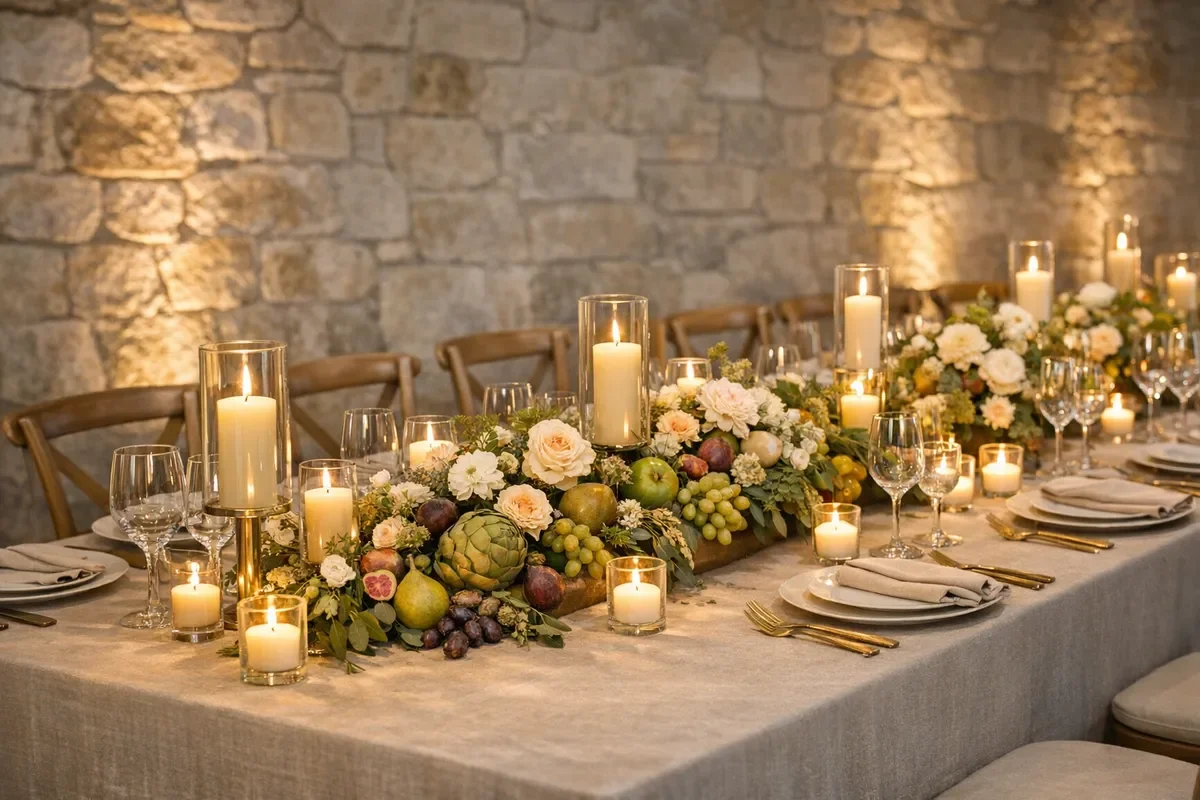
Reception vignette: long tables with neutral linen, layered candlelight, seasonal Napa produce woven into florals, soft uplighting on stone walls.
Hospitality-Forward Details: Welcome Events, Wine Country Activities, and Recovery Brunch Ideas
Thoughtful touches turn a wedding into a weekend. A welcome walk‑through downtown with sips and small bites, a mellow e‑bike spin, or a chef’s market tour sets the tone. For car‑free ideas and trails connecting towns, explore the Vine Trail. (vinetrail.org)
We purpose‑build neighborhood guides and RSVP microsites with time‑boxed options, so guests self‑select their perfect pace. Sunday’s recovery brunch closes the loop—light, bright, and easy to reach before departures.
This hospitality layer is where your values show up: inclusivity, access, and genuine care for everyone’s experience.
Designing With Place: Sophisticated, Locally Inspired Decor, Florals, and Culinary Pairings
Design cohesion starts with Napa’s palette. Think textural linens, stoneware, and seasonal florals that echo vineyard lines and oak canopies. Build your menu around varietal pairings and seasonal produce. For pairing inspiration, browse Napa Valley Vintners’ Recipes & Wine Pairings. (napavintners.com)
We highlight one or two hero installations—never everything at once—and integrate typography and materials from invitations through wayfinding. Simplicity reads as luxury when light, texture, and pacing do the talking.
A curated wine arc (sparkling welcome, varietal‑forward dinner, dessert pour) anchors the evening without overwhelming palates.

Stylized top‑down of place setting: stone charger, neutral linen napkin with grapevine sprig, minimal menu listing varietal pairings, small bud vase with seasonal bloom, warm candlelight.
Risk Management: Weather Plans, Fire Season Contingencies, and Vendor Backup Strategies
Luxury is feeling prepared. Your plan should include weather‑ready tenting, heating, and flooring; wildfire‑season contingencies; and backup vendors. Review defensible‑space and hardening guidance from CAL FIRE’s Ready for Wildfire program: Defensible Space. (readyforwildfire.org)
We set decision deadlines (e.g., tent “go/no‑go” by 10 days out), confirm vendor alternates, and keep real‑time comms ready for air‑quality or wind shifts. Proactive thresholds prevent reactive chaos.
A great coordinator documents it all in one production binder—sent digitally to every stakeholder.
Coordination vs. Planning: What Your Napa Wedding Coordinator Actually Handles
Know the role; protect the result. Full‑service planning covers strategy, vendor curation, design leadership, and production management. Day‑of coordination executes a plan you’ve already built; it doesn’t replace months of decisions. For a sense of industry competencies, see the Events Industry Council’s CMP International Standards. (eventscouncil.org)
Ask your coordinator how they structure decision bundles, manage run‑of‑show, and escalate risk. Operational clarity is the real stress reducer.
If your bandwidth is tight, choose planning + production; if you love vendor hunting and mood boards, a coordination‑plus model can work.
What to Ask Before You Book: Coordinator Fit, Portfolio, and Venue Expertise
Great fit beats generic packages. Request case studies with similar guest counts, town locations, and curfew rules. Confirm production tools, communication cadence, and who’s on‑site. Review ethics and professional standards with associations like WIPA’s Member Code of Ethics. (wipa.org)
Probe their venue fluency: conditions of approval, noise plans, shuttle staging, and rain pivots. The best answer is a specific one—rooted in Napa logistics, not generalities.
Finally, ask how they protect your time: consolidated approvals, curated choices, and one calendar that respects your work week.
Want a second opinion on your plan? Share your draft timeline and vendor list—we’ll flag risks and fast wins in one review.
Next Steps: Book a Consultation to Map Your Napa Wedding Weekend Timeline (Conclusion)
A Napa wedding coordinator elevates your local‑luxe vision by aligning design, hospitality, and compliance. With permits handled, shuttles humming, and a guest‑first flow, you get the luxury you wanted most: presence.
Your next step is simple: schedule a brief planning call and start shaping a weekend arc that feels effortless and personal. For venue and room‑block support, you can also tap Wedding Planning Assistance. (visitnapavalley.com)
Protect your time, amplify guest joy, and make design decisions once. Then sip, savor, and celebrate—close to home, at a luxury level that feels unmistakably you.
FAQ: Napa Wedding Coordinator Essentials
Do I really need a coordinator if my venue has an in‑house manager?
Yes—venue managers and coordinators serve different priorities. Venue teams protect their space and staff; your coordinator protects your overall guest experience, timeline, and vendor team. Two roles working together create seamless, high‑touch execution.
Can we host our ceremony at a winery?
Sometimes—but many wineries can’t host weddings. Napa’s winery regulations and individual permits limit what’s allowed. A coordinator will confirm options and present alternative venues with vineyard views that meet your style and capacity.
How do we handle transportation for 120+ guests across towns?
Centralize pickup points and stagger loops. Your coordinator times shuttles by route length, sunset photos, and end‑of‑night egress. Expect QR‑based check‑in, ADA planning, and a designated car for elders or speakers.
What’s the smartest way to keep the party going without breaking noise rules?
Design for the code and your venue’s permit. Directional speakers, dance‑floor orientation, and a planned indoor after‑set protect energy and compliance—so the night ends on a high, not a hard stop.
We only have 6–7 months. What gets decided first?
Lock venue, caterer/culinary partner, photo, music, and transportation. Then run biweekly decision bundles for design, hospitality details, and risk planning. The right cadence yields luxury without micromanagement.