
How much does a Napa wedding planner cost?
A great Napa planner is often a five-figure line item—and the right one can save you more than they cost. In a destination market where venues, transport, and hospitality come at a premium, couples want clarity. You’re asking the right question: what does “Napa wedding planner cost” really mean for your date, venue type, and guest count?
National context helps. The average U.S. wedding ran about $33,000 in 2024, with spending patterns shifting by location, size, and vendor mix, according to The Knot’s 2025 Real Weddings Study. (theknotww.com)
This guide breaks down realistic Napa planning fees, service tiers, smart ways to reduce risk and overspend, and sample budgets for different guest counts. Expect frank numbers, practical tradeoffs, and a path to decide which level of support fits your priorities.
Ready to talk real numbers? Book a free 20‑minute consultation and we’ll map your planning tier, target budget, and first‑choice dates.
Table of contents
What does a Napa wedding planner cost? (Introduction to typical price ranges)
Average cost of a wedding planner in Napa Valley: What couples actually spend
Full-service vs. month-of wedding coordination in Napa: Services, scope, and pricing
Napa wedding planning packages and pricing: What’s included at each tier
Do wedding planners charge vendor markups in Napa? How fees, commissions, and transparency work
Key factors that drive Napa wedding planner pricing (venue type, guest count, season, logistics)
How a Napa wedding planner saves money and time in a premium market
Building your Napa wedding budget: Planner fees, vendor costs, and realistic allocations
Sample budgets: Cost scenarios for intimate, mid-size, and large Napa destination weddings
Questions to ask before you book: Scope, communication, onsite team, and contingency planning
How to choose the right planner for your Napa destination wedding (experience, fit, and value)
Next steps: Book a free consultation to talk budget and planning options (Conclusion)
What does a Napa wedding planner cost? (Introduction to typical price ranges)
Most Napa planning fees fall into clear tiers, and design/production complexity drives the top end. In Napa, “coordination” is lean, “partial” adds targeted planning help, and “full‑service” covers strategy, vendor management, design, and production.
Entry pricing for coordination starts lower, but premium dates, complex logistics, or multi‑day events push costs up fast. The national market is a helpful reference point—compare your quotes to the starting rates planners report in guides like WeddingWire’s Planner Cost Guide. (weddingwire.com)
For destination‑style Napa weekends, assume a higher baseline: longer hours, bigger teams, and more pre‑event work. The key is aligning scope to what you truly need and avoiding “everything” packages if you won’t use them.
Average cost of a wedding planner in Napa Valley: What couples actually spend
Recent Napa data shows seasoned planners typically range from the mid‑four figures to well into five figures. A current Napa cost roundup indicates month‑of/day‑of coordination at roughly $2,000–$4,500, partial planning around $4,000–$10,000, and full‑service $6,000–$20,000+—with many couples landing near $15,000 for full planning. Percentage models of about 10–18% of the total wedding budget also appear for full‑service. (withjoy.com)
Sticker shock often reflects event ambition: large guest counts, design‑forward builds, and weekend itineraries increase hours and staff. Fees also vary by the firm’s seniority, portfolio, and whether they bring production capabilities in‑house.
When you compare proposals, weigh value signals: team size on the day, lead planner involvement, design deliverables, and decision‑making cadence. The “cheapest” plan can be the most expensive if it shifts risk back to you.
Quick lens: where Napa quotes cluster
Mid‑market full‑service often falls in a tight band; luxury and multi‑day weekends stretch beyond it. Pair fees with target outcomes—guest experience, flow, and stress reduction—not just hours.
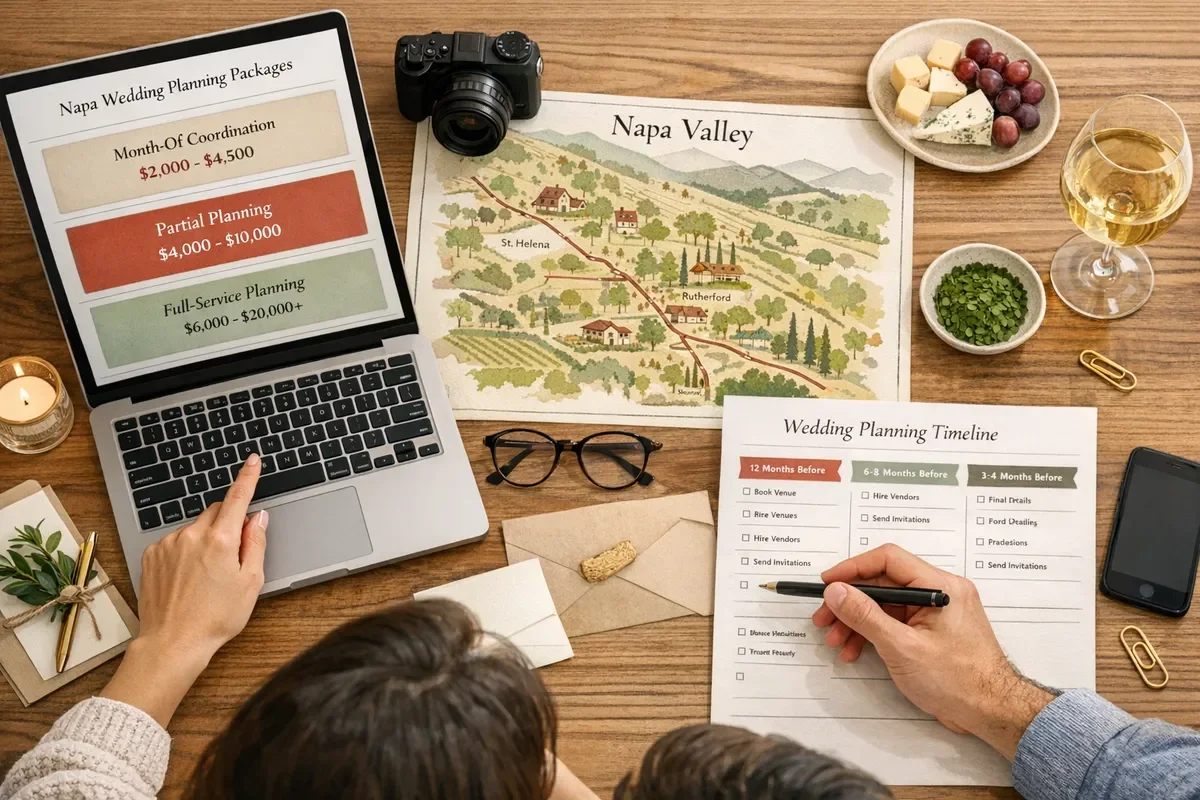
Couple reviewing a Napa planning proposal showing three tiers: month‑of ($2–4.5k), partial ($4–10k), full‑service ($6–20k+); laptop, timelines, vineyard map.
Full-service vs. month-of wedding coordination in Napa: Services, scope, and pricing
Full‑service means start‑to‑finish strategy, design, and vendor leadership; month‑of ensures flawless execution of your plan. In Napa, both have value—your choice depends on time, complexity, and design expectations.
Full‑service teams craft vision, source vendors, negotiate, manage budgets, create layouts, and run production. Month‑of (often 6–8 weeks out) consolidates final details, builds run‑of‑show, and quarterbacks the day so you can be present. See how full‑service typically operates via Brides’ explainer. (brides.com)
If you want layered design, multiple venues, or a weekend experience, full‑service is the safer bet. For a hotel ballroom with in‑house catering and simple logistics, month‑of can be plenty—provided you’re organized.
Napa‑specific nuance
Design‑forward vineyard aesthetics often require rentals, lighting, and layout choreography. Add travel, shuttles, and wine service rules and you’ll understand why full‑service is popular here.
Napa wedding planning packages and pricing: What’s included at each tier
The best packages are crystal clear on deliverables, meetings, and onsite staffing. Expect a written scope that spells out design assets, vendor meetings, site visits, production schedules, and strike.
Month‑of packages typically start their engagement about a month or more out and focus on timelines, confirmations, and day‑of leadership. For a national snapshot of “day‑of” expectations and costs, review The Knot’s guide to day‑of coordination. (theknot.com)
Partial planning fills gaps—think design refinement, rentals plan, or sourcing remaining vendors. Full‑service includes concept, budget strategy, vendor team assembly, and management from contract to breakdown.
Watchouts in the fine print
Cap on planning hours, number of site visits, rehearsal support, and the size of the onsite team are the levers that most change outcomes—and cost.
Do wedding planners charge vendor markups in Napa? How fees, commissions, and transparency work
Policies vary, but reputable pros disclose any vendor commissions or referral fees. Some planners price as a flat fee, others charge a percentage of total spend, and a minority accept vendor commissions—always ask what’s included and how pricing is structured.
The Association of Bridal Consultants notes that some vendors do offer commissions but “strongly discourages” the practice and requires disclosure of any supplier payments. Read their stance in the ABC FAQ. (abcweddingplanners.com)
If a planner proposes “cost‑plus” purchasing, clarify margins and ownership of trade discounts.
Key factors that drive Napa wedding planner pricing (venue type, guest count, season, logistics)
Napa logistics—venue rules, guest transportation, and seasonal demand—drive planner hours and team size. Guest count and complexity multiply touchpoints; harvest weekends often require earlier calls and bigger crews.
A unique Napa wrinkle: most wineries cannot host weddings under the county’s Winery Definition Ordinance, which pushes many celebrations to hotels, estates, or the few grandfathered wineries. See the overview from Visit Napa Valley’s wedding FAQ. (visitnapavalley.com) Supporting detail on the ordinance’s impact appears in Wine Enthusiast’s explainer and local reporting. (wineenthusiast.com)
Alcohol service at non‑licensed spaces typically requires a licensed caterer with a California ABC Type 58 catering authorization—another planning task that adds steps and time. (abc.ca.gov)
Seasonal pressure is real
Harvest (Aug–Oct) and peak spring dates book first and carry premiums; winter and shoulder months add value but may need weather‑ready plans.

Map‑style visual of Napa valley with venue types flagged (hotel, estate, grandfathered winery), shuttle routes, and timeline blocks; overlay showing harvest (Aug–Oct) as high‑demand.
How a Napa wedding planner saves money and time in a premium market
A strong planner reduces rework, protects deposits, and prioritizes spend where guests feel it. In Napa, the ROI often shows up as better vendor fits, fewer overtime charges, and cleaner logistics that prevent late‑night fees.
Planners also save your time—vetting proposals, negotiating terms, and sequencing holds—so you stay focused on big decisions. For an overview of roles, pricing models, and when a planner pays off, see Investopedia’s guide. (investopedia.com)
Consider the cost of a preventable mistake: missed rental specs, bus permits, or noise cutoffs can cost more than a coordination fee.
Mini‑case
A 150‑guest St. Helena weekend avoided $3,000 in late‑pickup fees when the planner re‑sequenced shuttle loops and flip crews to hit venue deadlines.
Building your Napa wedding budget: Planner fees, vendor costs, and realistic allocations
Anchor your budget, then layer in planning support to match complexity. Use state and regional benchmarks to set expectations, then pressure‑test against priority vendors and dates.
Nationally, couples averaged about $33,000 in 2024, with wide variance by state and city; California typically skews higher. See current benchmarks and tools on The Knot’s average wedding cost page. (theknot.com)
A practical frame: start with venue/catering, add planning/design, then allocate for music, photo/video, florals, rentals, transport, and hospitality blocks. Revisit totals after your first two vendor holds.
Rule of thumb
If your guest count exceeds 140 or you’re using multiple sites, plan for a larger onsite team and contingency buffer.
Sample budgets: Cost scenarios for intimate, mid-size, and large Napa destination weddings
These illustrations show how planning tier, headcount, and season shift totals. Numbers are realistic ranges—not quotes—and assume ceremony + reception with wine‑country styling.
Intimate 60–80 guests (shoulder season, hotel venue): $85k–$130k with month‑of or focused partial planning; add $4k–$8k for elevated design support.
Mid‑size 120–150 guests (peak season, estate/hotel mix): $175k–$260k with partial or full‑service planning; design‑forward builds push higher.
Large 180–220 guests (peak, multi‑day): $300k–$480k with full‑service planning and extended teams; include shuttles, tenting/lighting contingencies, and after‑party ops.
Seasonal context—spring bloom vs. harvest demand—affects rates and availability, so place holds early; month‑by‑month highlights are outlined by Visit Napa Valley’s seasons guide. (visitnapavalley.com)

Three side‑by‑side budget cards labeled intimate, mid‑size, large; lines for planning, venue/catering, music, florals, rentals, transport; Napa vineyard background.
Questions to ask before you book: Scope, communication, onsite team, and contingency planning
Great fits are transparent on scope and response times—and carry insurance. Ask who leads your project, how often you meet, and how many staff are onsite for your guest count and layout.
Confirm business license and liability insurance; WIPA membership requires both plus a signed ethics pledge, which is a useful proxy for professionalism. Review the requirements in WIPA’s membership FAQ. (wipa.org)
Clarify backup plans, vendor payment flows, and how design revisions are handled. Align on decision‑making to keep momentum.
How to choose the right planner for your Napa destination wedding (experience, fit, and value)
Prioritize chemistry, portfolio relevance, and process. You’ll spend months together—choose a communicator whose taste and tempo match yours.
Look for Napa‑specific expertise, strong vendor relationships, and clean, detailed run‑of‑show docs. If you want options, browse vetted directories like the Association of Bridal Consultants planner directory. (associationofbridalconsultants.squarespace.com)
Ask for two recent references that match your venue type and guest count; confirm how they handled surprises.

Couple interviewing two planners at a tasting room table; open laptop with timeline, floor plan; swatch books and rental samples on table.
Next steps: Book a free consultation to talk budget and planning options (Conclusion)
Your budget, guest experience, and peace of mind all improve when scope fits your event. Whether you need month‑of assurance or full‑service leadership, the right partner helps you invest where it matters and avoid costly missteps.
If Napa is your place, get your logistics and timeline in motion now and confirm date‑driven holds. For paperwork basics, bookmark the county’s Marriage License & Ceremony page to keep admin simple.
Book a free consult, and we’ll map your options in 20 minutes—then you can choose with confidence.
Want a fast budget sanity‑check? Share guest count, season, and top‑3 priorities and we’ll send a custom planning tier and high‑level budget within 48 hours.
FAQs
How far in advance should we book a Napa wedding planner?
Book 12–18 months ahead for peak (Aug–Oct) and 9–12 months for shoulder seasons. Napa’s busiest dates go first, and early holds secure the best vendor fits. If you’re flexible on weekday or winter dates, excellent teams are still bookable inside 9 months.
Is month-of coordination enough for a Napa destination wedding?
It can be—if your venue is turnkey and logistics are simple. Hotels with in‑house catering and minimal flips suit month‑of well. Multi‑site days, custom builds, or heavy design point to partial or full‑service so your planner can shape decisions earlier.
Do Napa wineries host weddings?
Most cannot host weddings due to county rules (the WDO). A handful of wineries were grandfathered, but many couples choose hotels, estates, or restaurants and plan tastings at wineries for other events that week. Ask your planner about compliant options.
Will a planner actually save us money?
Often, yes—by preventing fees and focusing spend where it shows. Expect savings from better sequencing (overtime avoidance), right‑sized rentals, and vendor alignment. Soft savings—your time and lower stress—are significant too.