
Napa Wedding Planners Vs. DIY: Cut Stress, Elevate Style
Why Napa Wedding Planners Vs DIY Matters for Destination Couples (Introduction)
A Napa wedding can be unforgettable—or unbelievably stressful—depending on your plan. When you’re coordinating from San Francisco, Los Angeles, New York, or Chicago, even small tasks balloon: venue policies, tasting reservations, guest transport, and tight weekend timelines all collide.
Napa’s charm is real, but so are its rules and logistics. A planner translates local nuance into clear steps, aligns vendors, and protects your vision when you’re hundreds or thousands of miles away. For a quick primer on the region’s wedding landscape, start with Visit Napa Valley’s weddings overview.
You’ll learn how Napa wedding planners reduce friction, what’s realistic to DIY from afar, what it actually costs, and how to build a seamless wine country weekend your guests will rave about. The goal is simple: destination wedding planning Napa Valley—with less stress and more style.
Planning a Napa wedding and want expert eyes on your ideas? Book a quick, no-pressure consult and get tailored next steps for your date and guest count: https://extraordinaryevents.vip/contact-2
What a Napa Wedding Planner Actually Does: From Venue Scouting to Weekend Itineraries
Think of a great planner as your single point of coordination. They scout venues with your style, confirm capacity and restrictions, and map ceremony-to-reception flows. They also handle budget pacing, tasting schedules, contract reviews, and a minute-by-minute weekend itinerary.
Beyond checklists, planners mediate trade‑offs: terrace views vs shade at ceremony, shuttle counts vs Uber surge risk, or plated dinner vs family-style pacing. The best ones communicate options in plain English and guide you toward confident decisions. For a broad look at event-planning duties, the U.S. government’s career guide to event planners is helpful background (U.S. Bureau of Labor Statistics).
A Chicago couple recently hired a planner to narrow 12 venues to 3 that fit guest count, budget, and noise rules. The planner pre-booked tastings, synced photo timelines with golden hour, and secured an indoor backup. Result: fewer site visits and a weekend that felt effortless, not rushed.
From scouting to schedules in plain English
Your planner distills options into one tidy plan, then manages vendors so you don’t have to. The weekend itinerary becomes your stress shield—everyone knows where to be and when.
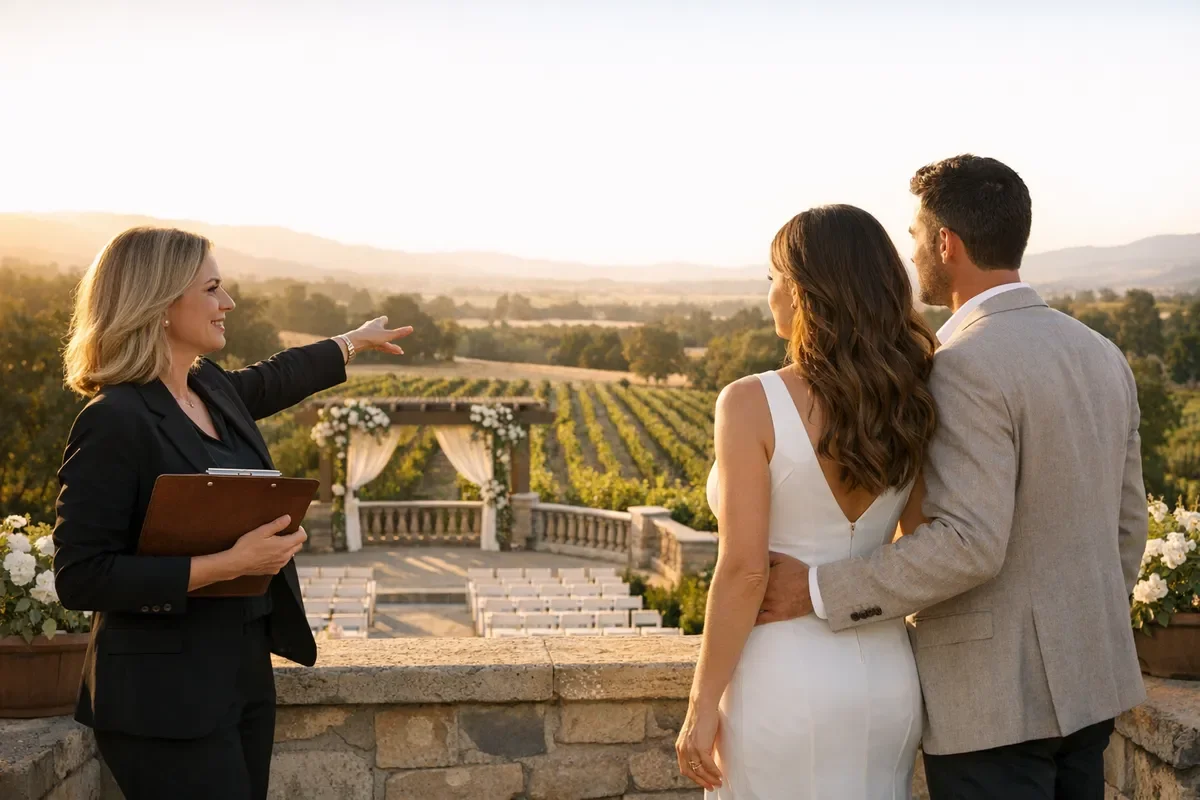
couple on a venue walk-through with planner pointing to ceremony terrace, clipboard in hand; vineyard view, late-afternoon golden light; elegant attire, calm and focused mood.
DIY in Napa: What’s Realistic When You’re Planning From Afar
DIY works when the tasks are research-heavy, not coordination-heavy. Curate your aesthetic, shortlist venues, and pre-vet photographers from home. You can also build a preliminary budget, draft your website, and poll guests about lodging preferences.
On-the-ground work—site tours, permit questions, shuttles, and hospitality blocks—gets trickier without local context. Align your DIY plan with public transport and shuttle options to keep guests moving safely; the Napa Valley Transportation Authority outlines regional bus and shuttle services that planners often integrate into wedding timelines.
Hybrid is smart. Keep creative decisions (mood boards, attire, playlists) while handing off vendor negotiations, schedule building, and day-of management. You keep control—and your weekend energy.
A practical split
Handle digital-first tasks yourself; delegate anything that needs local calls, permit reading, or multi-vendor timing to a pro. The payoff is a calmer month-of and a smoother guest experience.

Laptop open to shared planning spreadsheet while couple on video call with Napa planner; screen shows shuttle routes and tasting schedule; cozy SF apartment.
Cost Breakdown: How Much Does a Napa Wedding Planner Cost vs DIY Hidden Expenses
A planner is an investment that can prevent costly mistakes. Nationally, wedding planning services average around $4,047, with day-of coordination often running four figures; Napa’s premium market can trend higher. See current benchmarks in Zola’s Cost Index and planner guide (Zola’s wedding planner cost breakdown). (zola.com)
DIY isn’t free. Missed cutoff times, rush fees, extra shuttle loops, late add-ons, or last-minute rentals for shade, heaters, or restrooms can erase savings quickly. A planner’s vendor relationships often unlock flexible holds, packaged tastings, or bundled décor that offset fees.
For mid- to high‑income couples, the time cost is real. If you value weekends and evenings, a planner’s hours may be worth more than the line item suggests—especially during crunch months.
A quick scenario
Skipping a planner, a couple added two unplanned shuttle trips and an overtime hour for catering. Those three decisions alone exceeded a typical coordination fee.

Side-by-side comparison graphic: left column DIY hidden costs (overtime, extra shuttles, rush fees), right column planner-managed efficiencies.
Securing Napa Vineyard Wedding Venues: Planner Access, Permits, and Wine Country Rules
Most wineries cannot host weddings due to long-standing county rules. Napa’s Winery Definition Ordinance (WDO) limits what activities wineries can permit; only a handful are “grandfathered” for weddings. Reviewing venue eligibility early avoids dead ends—your planner will steer you to compliant estates, resorts, and private properties. Read the source text in the county ordinance (Winery Definition Ordinance No. 947 PDF). (countyofnapa.org)
A seasoned planner also clarifies use-permit nuances: guest caps, amplified sound rules, parking plans, and what counts as “tours and tastings.” That context shapes your ceremony start time, band plan, and after-party strategy.
When venues meet your vision and the rules, everything else aligns—vendor availability, photography timing, and guest movement all get easier.
Example
A planner confirmed a popular winery was tasting-only and pivoted to an estate venue with vines-on-view for portraits and a ballroom for dancing—no compromises on the wine country feel.
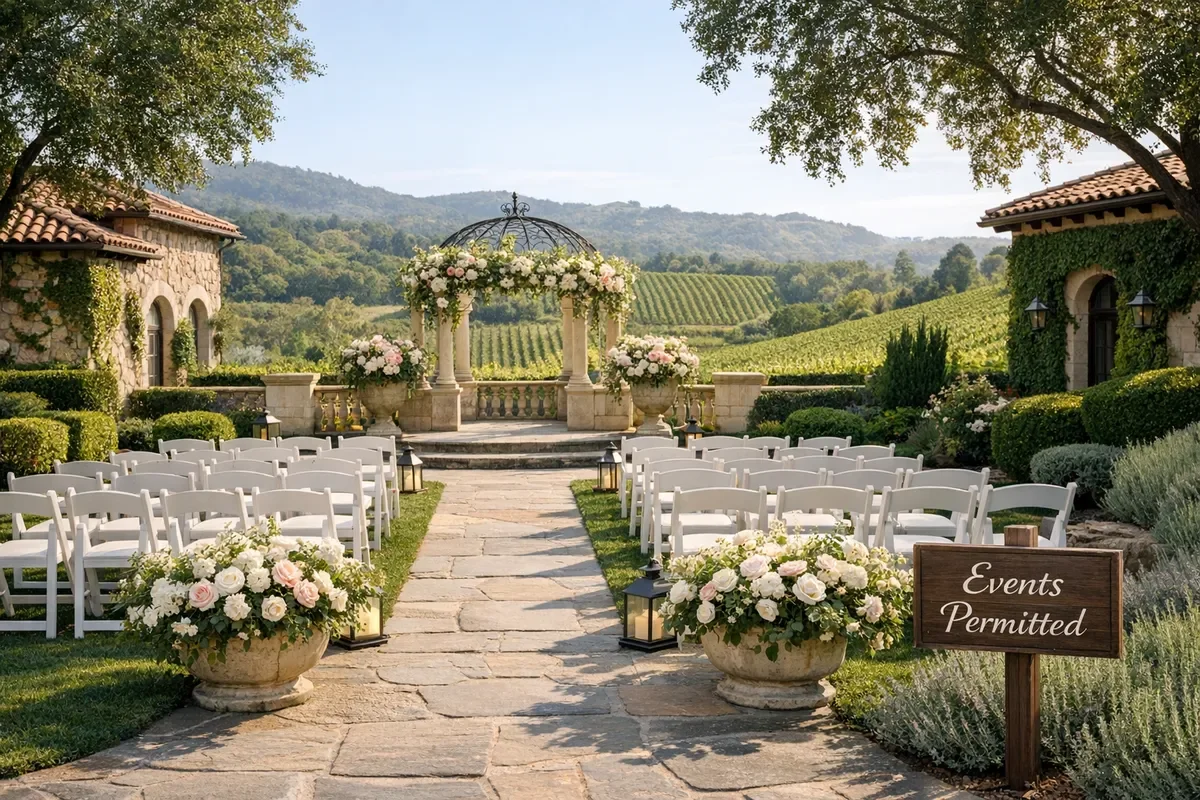
Elegant estate courtyard ceremony site framed by vineyards; discreet sign noting “events permitted”; late-spring light.
Vendor Coordination in Napa: Leveraging Local Relationships for Catering, Wine, and Transport
Local relationships save time and smooth approvals. Napa caterers know kitchen access points, load-in quirks, and heat management. Transportation teams know bottlenecks on Highway 29 vs. Silverado Trail and the timing to hit sunset pours.
Alcohol service carries responsibilities. In California, on‑premises alcohol servers must complete Responsible Beverage Service (RBS) training—your planner knows who’s certified and compliant. Learn more from the state’s official program (California ABC RBS program). (abc.ca.gov)
Coordinators also negotiate tasting flights, corkage, or service formats with wineries and caterers so hospitality feels generous without blowing the budget.
A simple win
Your planner can align caterer, venue, and shuttle call-times so dinner is hot when guests arrive—no hungry waits, no cold entrées.
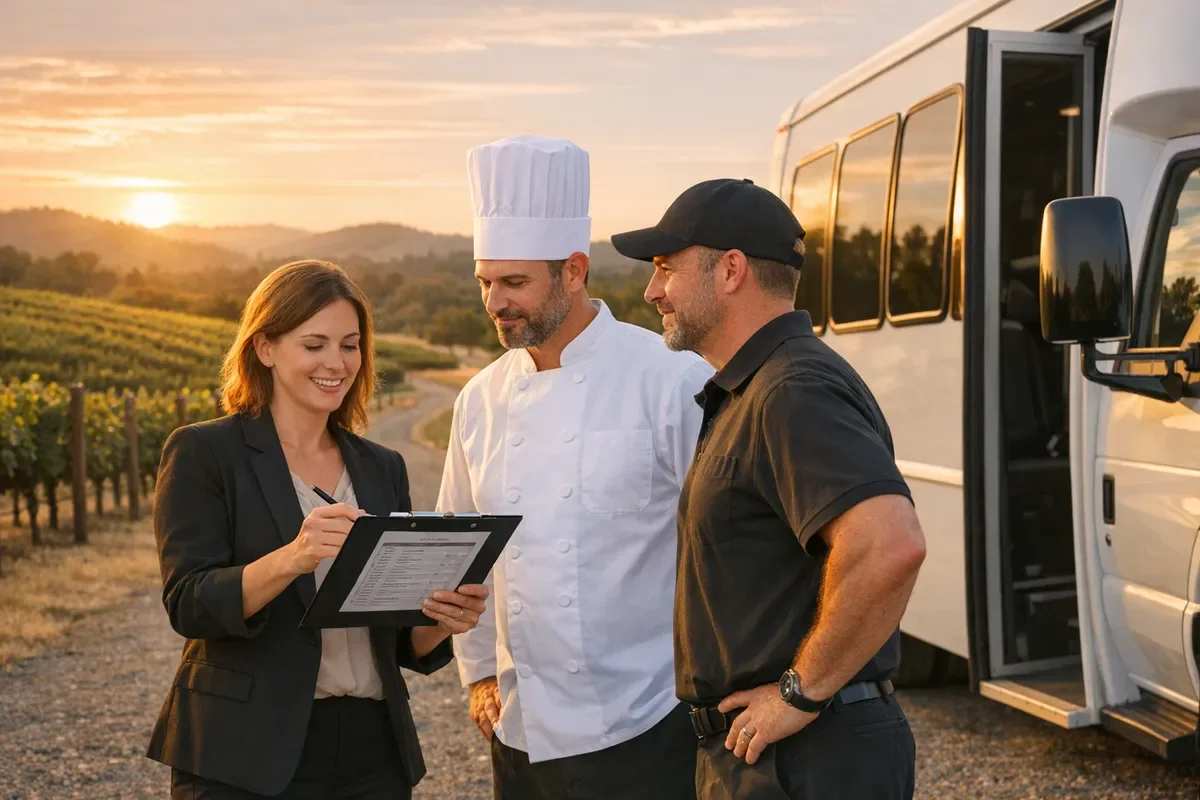
Planner reviewing run-of-show with chef and transportation lead beside a shuttle; vineyard drive in background; warm golden-hour light.
Design and Aesthetics: Elevating Your Wine Country Style Without Reinventing the Wheel
Wine country design favors refined, effortless layers. Think natural textures, seasonal florals, and lighting that glows as the sun sets. Your planner translates your mood board into cohesive rentals, linens, and tablescapes.
Color confidence helps. Tools like Pantone’s harmonies in Pantone Connect can guide balanced palettes and accent choices; see how harmonies work in Pantone’s support article (Pantone harmonies in Pantone Connect).
A Napa‑savvy planner also avoids reinventing the wheel: borrowing tried‑and‑true layouts for family-style dinners, escort displays that tolerate breeze, and candle plans compliant with venue rules.
Design that photographs well
Choose 1–2 anchor colors, then layer neutrals and mixed materials to keep it timeless. The result is a frame‑worthy album that ages beautifully.
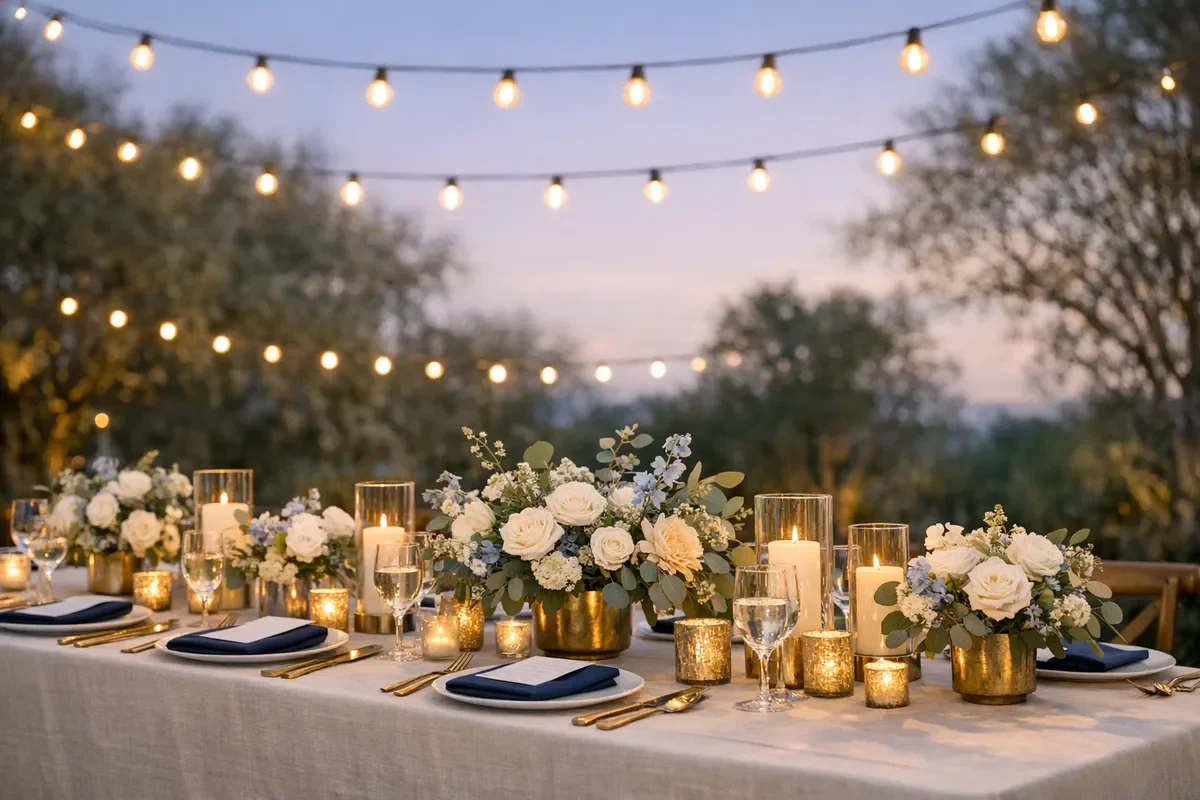
Reception table under café lights at dusk; neutral linens, seasonal florals, mixed metals; two-color palette accents.
Logistics You Can’t Ignore: Lodging Blocks, Guest Transport, Tastings, and Fire Season Contingencies
Lodging and transportation make or break guest experience. Napa’s towns vary in vibe and distance; blocks across two towns can split budgets and minimize shuttle time. Your planner sequences shuttle loops to hit ceremony on-time and reduces rideshare chaos after last dance.
Seasonal planning matters. Build a smoke or heat contingency, consider shade for ceremonies, and prep hydration for tastings. For preparedness basics, review CAL FIRE’s guidance on readiness and defensible space (CAL FIRE “Get Ready”). (fire.ca.gov)
When logistics click, your weekend feels like a VIP house party—easy, comfortable, and safe for every guest.
Smart sequencing
Cluster tastings by subregion, use a mid‑valley pickup point, and schedule buffers between events to prevent timeline slip.
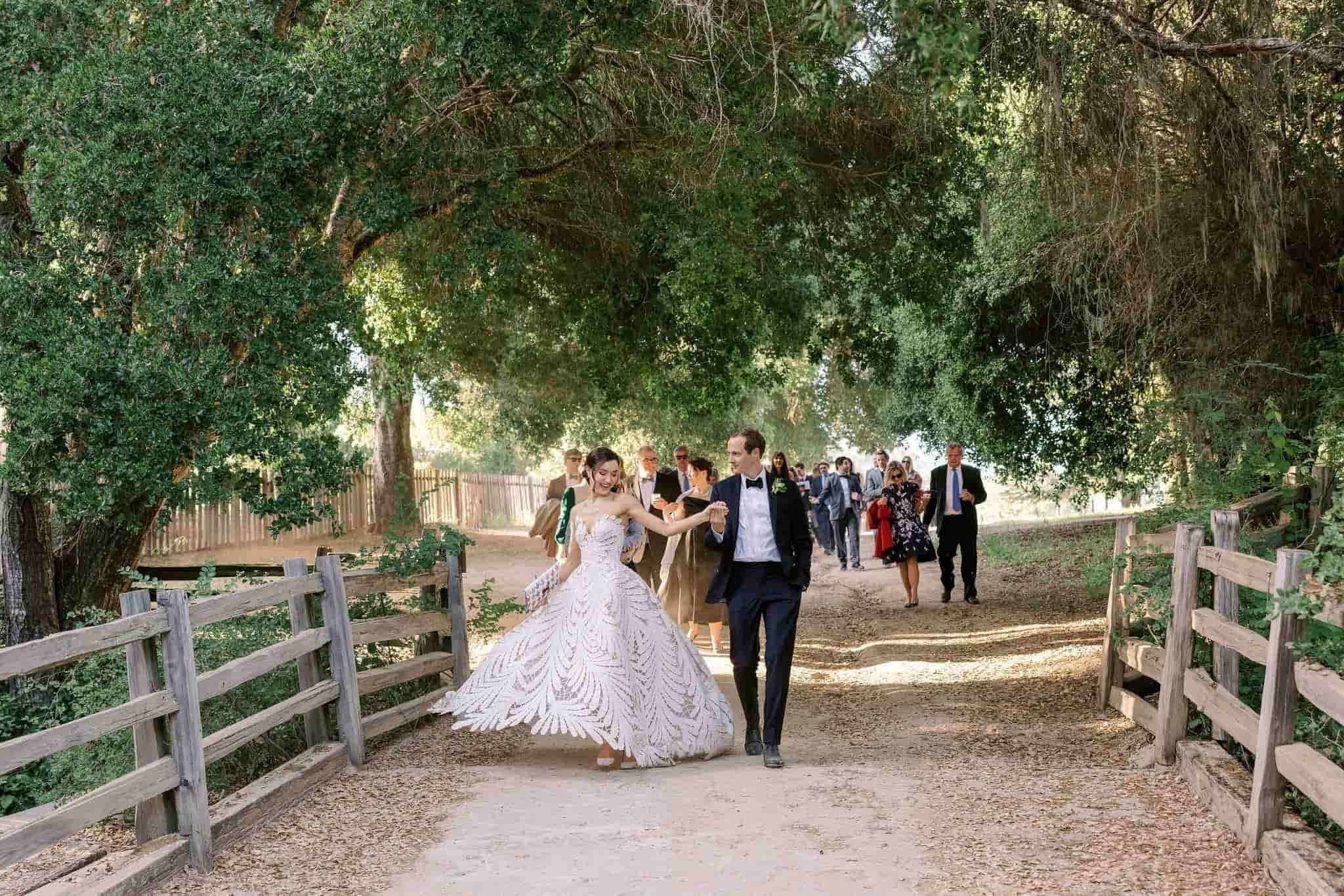
The happy bride and groom!
Building a Wine Country Wedding Weekend Itinerary: Welcome Party, Winery Tours, and Send-Off Brunch
Your guests want structure without stress. A perfect weekend flows: welcome party with light bites, a relaxed tasting block, an early ceremony for golden hour, and a breezy brunch send‑off.
Reservations remain wise, especially for popular tasting rooms and seated experiences. Visit Napa Valley’s tasting tips cover why appointments help and how long to budget between tastings (Wine tasting tips and reservations).
Your planner will sequence events to minimize transit, hold padded buffers, and design breaks so guests can explore towns between commitments.
Sample flow
Friday welcome party, Saturday tastings to early ceremony, Sunday brunch near hotel blocks. Simple, clear, memorable.

Tablescape at a recent wedding.
Timeline Management: From Tastings to Day-Of, How Planners Keep Napa Weddings on Track
Napa runs on timing. Golden-hour ceremonies, winery closing times, shuttle loops, and music cutoffs all shape your schedule. A planner builds a minute‑by‑minute run‑of‑show and enforces it kindly but firmly.
Local noise limits and amplified-sound rules vary by jurisdiction and venue; planners design around them so you never learn the rules the hard way. Napa County’s code outlines exterior noise standards that venues must respect.
A clear timeline also protects creative priorities—sunset portraits, toasts that land, cake before dancing—and absorbs small delays without stress.
The secret sauce
Vendors receive the same timeline and updates, so lighting, catering, and transport hit the same beats.

Couple reviewing a simple timeline.
When DIY Works—and When to Hire a Napa Wedding Planner (Hybrid Approaches)
DIY shines for vision; hire a pro for orchestration. Keep the creative fun—palettes, playlists, personal touches—and delegate vendor holds, contract terms, transport timing, and day‑of calls.
If your venue is all‑inclusive, a partial-planning or month‑of package may be perfect. For private estates or multi‑site weekends, full service usually pays off. For a neutral overview of planner roles and value, see this explainer from a major finance publisher (Investopedia on wedding planners).
A hybrid approach keeps your fingerprints on the design while a local pro runs the show.
Quick gut-check
If reading permits, wrangling shuttles, or building timelines sounds draining, bring in a planner. Your future self will thank you.
How to Choose the Right Napa Wedding Planner: Questions, Packages, and Portfolio Fit
Look for chemistry first, then proof of process. Ask how they build timelines, manage rain plans, and handle winery rules. Review full galleries, not highlights, to see how a design holds up across the day.
Professional affiliations can signal experience and standards. Use vetted directories to start your shortlist and confirm insurance and tenure (WIPA chapter directories).
Match package to venue style: resorts often suit partial or month‑of; private estates usually need full service. Portfolio fit + process clarity = lower stress.
Three must-asks
How do you communicate (and how often)? What’s your backup plan if you’re ill? How do you handle late vendor changes?
Want a fast, honest read on your venue and budget fit? Reserve a 20‑minute planning consult today: https://extraordinaryevents.vip/contact-2
Next Steps: Book a Free Consultation to Plan Your Napa Valley Destination Wedding (Conclusion)
Your Napa celebration should feel effortless, not effortful. With a local expert guiding rules, timelines, and vendors, you protect your style and your sanity.
A planner helps you make confident choices, keep guests comfortable, and build a wine country wedding weekend itinerary that flows. If you’re still exploring, get to know the valley’s distinct towns and regions for lodging and activities (Visit Napa Valley: towns & regions).
When you’re ready, bring your vision and questions—we’ll bring the plan. Let’s make Napa feel easy.
FAQs
Do wineries in Napa host weddings?
Only a few wineries can legally host weddings due to Napa County’s Winery Definition Ordinance; most are limited to production and tasting activities. Your planner will direct you to compliant estates, resorts, and private venues that deliver the vineyard feel without legal risk.
How much does a Napa wedding planner cost?
Expect higher-than-average pricing in Napa’s premium market. National averages hover around $4,000 for planning services, with day‑of coordination in the four-figure range; full‑service packages cost more and vary by scope. Your actual fee depends on guest count, venue type, and weekend complexity.
Can we DIY parts of a Napa wedding from another city?
Yes—design, research, and early vendor outreach are DIY‑friendly. Hand off contract negotiation, timeline building, shuttles, and day‑of management to a local pro. This hybrid keeps creative control while ensuring a smooth execution.
What’s the best way to plan guest transportation?
Cluster lodging and events and schedule shuttles with buffers. Your planner will choose routes that avoid bottlenecks and coordinate with venues on drop zones. This keeps the evening moving and guests safe after tastings.
Should we plan around wildfire season?
Yes—build contingency into your plan. Shade, hydration, indoor backups, and flexible photo timing keep guests comfortable. Planners monitor conditions and adjust timelines as needed.